
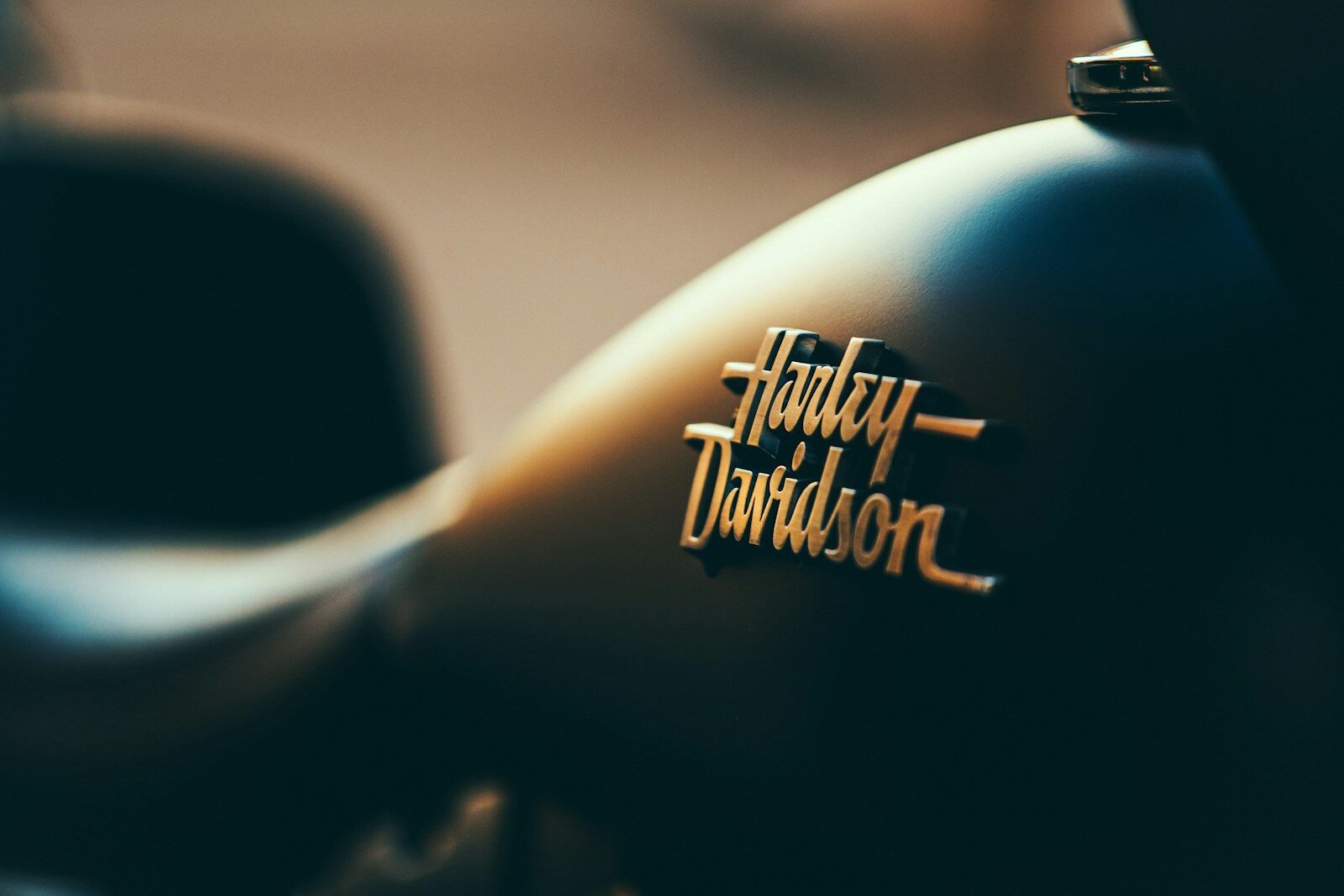
You’re chatting to someone at a coffee shop, maybe waiting for your oat flat white, when you notice the tattoos.
A sleeve of ink: some flames, an eagle, a motorcycle… and then, right there on their forearm, a Harley-Davidson logo. You do a double take.“Wait… is that the brand?”
They grin.
“Yep. Had it since my twenties. It means something.”
And they’re not alone. Thousands of people have tattooed the Harley logo on their bodies. There’s a reason Harley-Davidson gets quoted endlessly as one of the top marketing case studies.
Since 1903, they’ve been thundering down highways and into hearts by building one of the most iconic brand communities in the world.
One that rides together, rallies together, and yes… sometimes tattoos the logo on their actual skin.
(Talk about brand commitment. We’re over here just trying to get someone to buy our sweatshirts.)
So what makes Harley’s marketing tick like a finely tuned V-twin engine? And how can your brand spark the kind of loyalty that doesn’t rely on a sale to stay relevant?
We’ll ride through these key lessons:
- A clear breakdown of Harley-Davidson’s brand identity (and how it evolved)
- The community strategy behind HOG (Harley Owners Group) and why it works
- How Harley turns customers into advocates through rituals, belonging, and merch
- Prompts you can steal to build your brand’s emotional loyalty
- A simple “next 24 hours” plan to apply this to your own marketing
Harley’s Rebel Archetype: How the brand identity evolved
Harley-Davidson is a classic example of the Rebel or Outlaw archetype (those are brand archetypes). However, in the beginning, Harley’s identity was grounded in solving a practical problem.
- 1912: “The Motorcycle That Is Not Uncomfortable.”
- Early Harley wasn’t all about roaring down the highway or flipping off authority. It was about comfort. Back then, most motorcycles were basically bone-rattling contraptions that doubled as chiropractic experiments.
- Mid-century: “Live to Ride, Ride to Live.”
- Post-war America was craving freedom, adventure, and a chance to feel something. Cue the biker boom, and a shift toward identity-driven messaging. The brand moved from utility to attitude. Brotherhood. Open roads. Anti-establishment flair.
- 2017: “All for Freedom. Freedom for All.”
- As the world evolved, so did they. This tagline leans into something bigger: freedom as a shared value, not just a biker’s badge of honour.
Inclusivity and Harley Davidson Brand Perception: #StereotypicalHarley
Harley didn’t just sell “freedom.” They also challenged who gets to own that freedom.
Enter #StereotypicalHarley, a campaign that pushed back on the outdated perception of who rides a Harley.
It spotlighted riders from all walks of life (women, people of colour, young professionals), smashing the “middle-aged guy in leather” cliché.
What does your brand feel like in someone’s body? A clenched fist of purpose? A Sunday morning deep breath? Get weird with it. Get emotional.
Want to understand your brand identity on a deeper level?
Harley knew what they stood for. Do you? Grab our free brand archetypes class to find the emotional edge your brand is missing.
How Harley Built a Global Community with HOG
If emotional branding fuelled Harley’s identity, the Harley Owners Group (HOG) was the turbocharger that brought that feeling to life.
Part club, part cult (in a good way), part masterclass in community building.
Launched in 1983, HOG now has 1 million+ members across 1,400+ chapters worldwide, making it the largest factory-sponsored riding club on the planet.
The brand’s community-centric focus also played a major role in Harley’s 1980s turnaround.
Harvard Business Review called this community strategy “central to the company’s revival,” helping position Harley as a top 50 global brand by 2009.
Xavier, a French HOG leader, sums it up: HOG is “a hedonistic community where people love to come together and share new experiences.”
And they ride twice as often and spend 30% more. Proof it’s working.
Quick Brand-Building Prompt: What’s your tribe’s raison d’être? If your product had its own “club,” what activities, rituals, or events would gather your people, and what would keep bringing them back?
Inside the HOG Community
From small-scale Sunday meetups to mega-rallies like Sturgis and “Thunder in the Glens” Scotland (4,000+ riders, £15 million local economic boost), chapters run charity rides, safety courses, competitions, and live music.
- Local chapters adapt events to suit different demographics, including younger riders (some offer roles like “Young Officer” to keep the brand relevant).
- Chapters are often linked to a dealership and led by their own director.
- Harley involves employees and executives in community events.
- Member feedback shapes programming.
- Members are encouraged into leadership roles (mentors, organisers, chapter leads).
Merch, Loyalty, and the Kind of Advocacy you Can’t Buy
Harley’s customer base is also its best sales team. Organic referrals. Online defence squads.
Ride-or-die Facebook admins. It’s all part of the package.
Harley’s loyalty is built on identity.
- Advocacy (NPS): 81% of Harley-Davidson owners say they are likely to recommend the brand to others, making Harley one of the top-performing brands in Net Promoter Score within the automotive industry (Clarabridge Study, 2020).
- User-generated content: In 2015, Harley’s “Roll Your Own” campaign encouraged riders to customise and showcase their bikes online, driving millions of impressions without a big ad spend (MarketingWeek).
Unlike typical loyalty schemes (hi, 10% off your fifth soy latte), Harley rewards emotional connection.
Are you rewarding loyalty beyond discounts? Your best customers don’t want 10% off. They want to feel like insiders. Give them early access. Shoutouts. Roles. Purpose.
Want help building your own brand tribe?
Our free community intake model class will have you mapping yours faster than you can say “free ride.”
Key questions to ask if you want Harley-level loyalty
- What emotions does our brand actually evoke?
- What does our version of a “tribe” look like?
- Are we treating loyalty like a relationship… or a receipt?
- Where do we show up (online and offline)?
- What makes people talk about us when they’re not buying from us?
TL;DR: The Harley Davidson Marketing Playbook
If you want Harley-level loyalty without needing a literal motorcycle club, focus on these five levers:
- Identity: What do you stand for emotionally (not just functionally)?
- Belonging: How do people feel like insiders?
- Rituals: What do your people do together?
- Advocacy: How do you reward connection beyond discounts?
- Touchpoints: Where does the community show up online and offline?
Want to build your own cult-classic community?
We’ve got you.
Dive into our free resources made for marketers who want to build brand love that lasts:
- Discover your brand’s emotional edge with the free brand archetypes class
- Design your own community model with the free community intake model class
Want more? Here's your invitation from the school ⤵️
We don’t teach you how to do more. We teach you how to do it better.
You don’t need more hacks. You need smarter foundations, better systems, and clarity that cuts through the noise.You got into this to make a difference. Let’s help you do that, with strategy and a whole lotta heart.
➡️ Find out how we can help via our all-access pass.