
Social media is the one part of the job where “just wing it” catches up with you fastest. Miss a posting day and the algorithm notices before your boss does. Run five client accounts solo and your Notion doc of “content ideas” becomes a graveyard by Wednesday. This week we’re ranking the tools actually worth trusting with that chaos, starting with the actual management platforms, then the tools that solve a different problem entirely.
Quick housekeeping note before we get into it: we check this list every couple of months, so if a tool goes quiet or gets swallowed by someone bigger, we’ll have swapped it out before you go find out the hard way.
Also, if you need to flag a tool, please reach out to us. We do our best to check reviews and claims, but we love the help and trust our community.
Some of these tools were or are AMS partners and affiliates (marked with a *). Please note that we only partner and recommend tools we love and have tried for ourselves.
Best for Social Media Management
Rella *
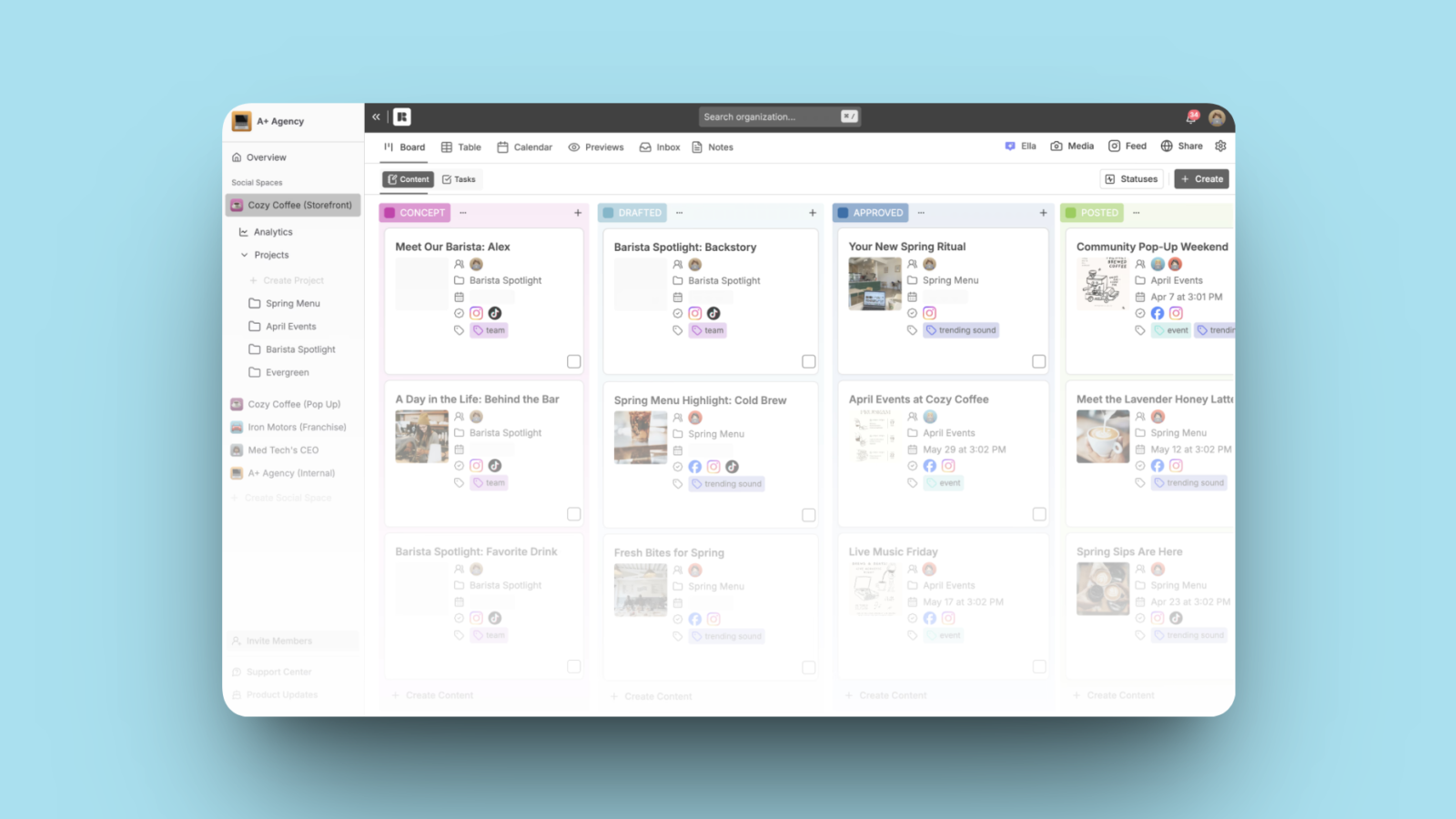
Rella tops this list because it’s project management built specifically for social media teams, not project management awkwardly stretched to fit one. Content planning, scheduling, approvals, and reporting live in one workspace, with an AI teammate called Ella doing the unglamorous parts (drafting, tidying, keeping things on-brand) so the humans can focus on the actual strategy. If you’ve ever tried to run a content calendar through a tool built for software teams, this is the version built for the job you actually have. (Quick disclosure: we’re also in early talks with Rella about a partnership, we just happened to already rate the tool before that conversation started.)
- Best for: social teams tired of running content through project management tools built for software teams.
- Watch out for: it’s newer to market than some of its competitors, integrations and the wider ecosystem are still catching up.
- How to make the most of it: lean on Ella (the AI teammate) for first drafts and tidying, not the final strategy calls, that’s still the bit worth doing yourselves.
SocialBee
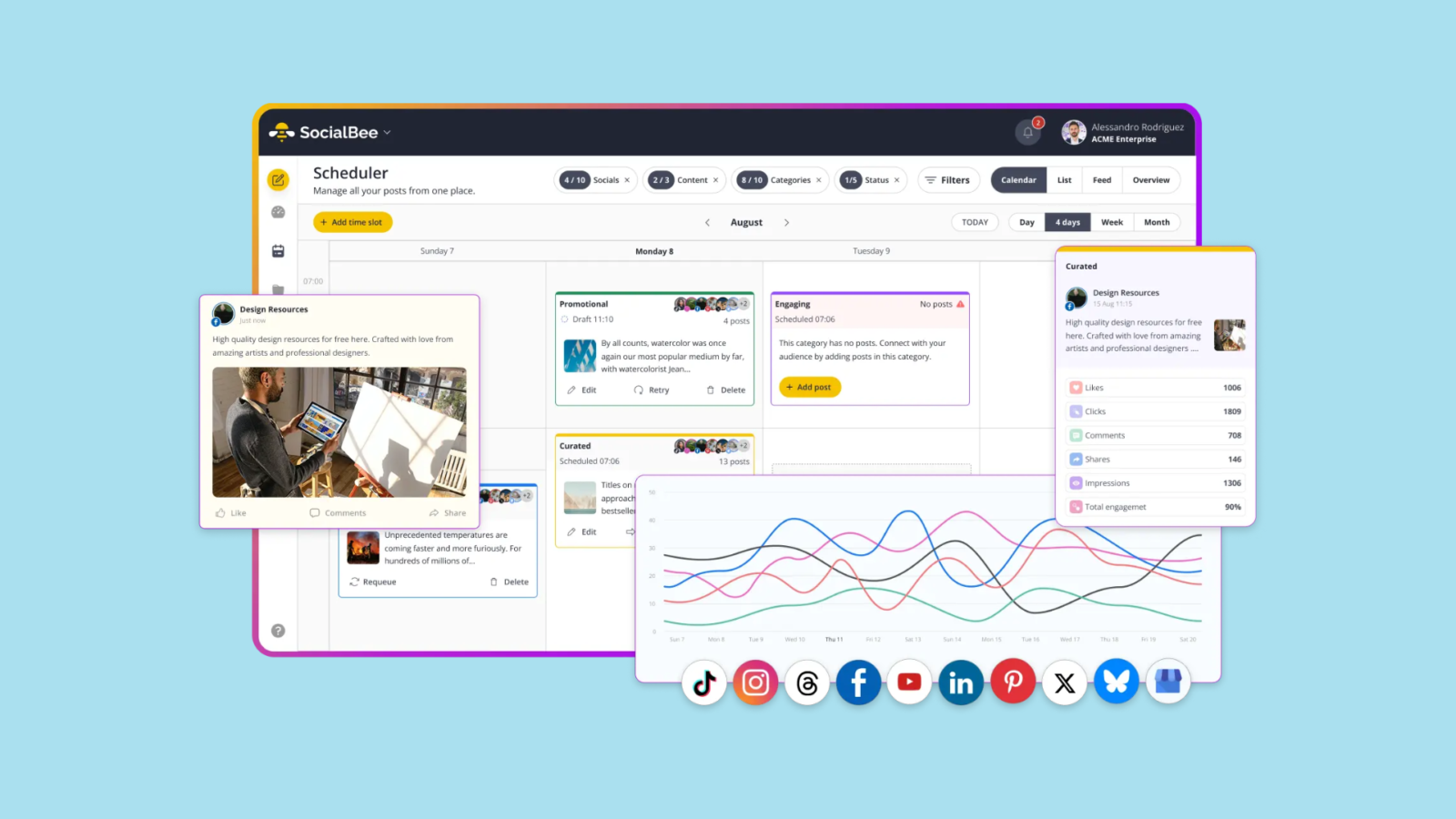
SocialBee is the pick if you want a strategy suggested to you, not just a blank calendar to fill. It leans hard into AI-assisted content generation, category-based posting, and keeping your mix balanced across platforms without you rebuilding it every week by hand.
- Best for: wanting a strategy suggested to you, not just a blank calendar to fill.
- Watch out for: the AI-assisted generation is only as good as what you feed it, weak brand guidelines in means generic content out.
- How to make the most of it: spend the first hour setting up your content categories properly, that’s what the AI leans on to keep your mix balanced later.
Planable
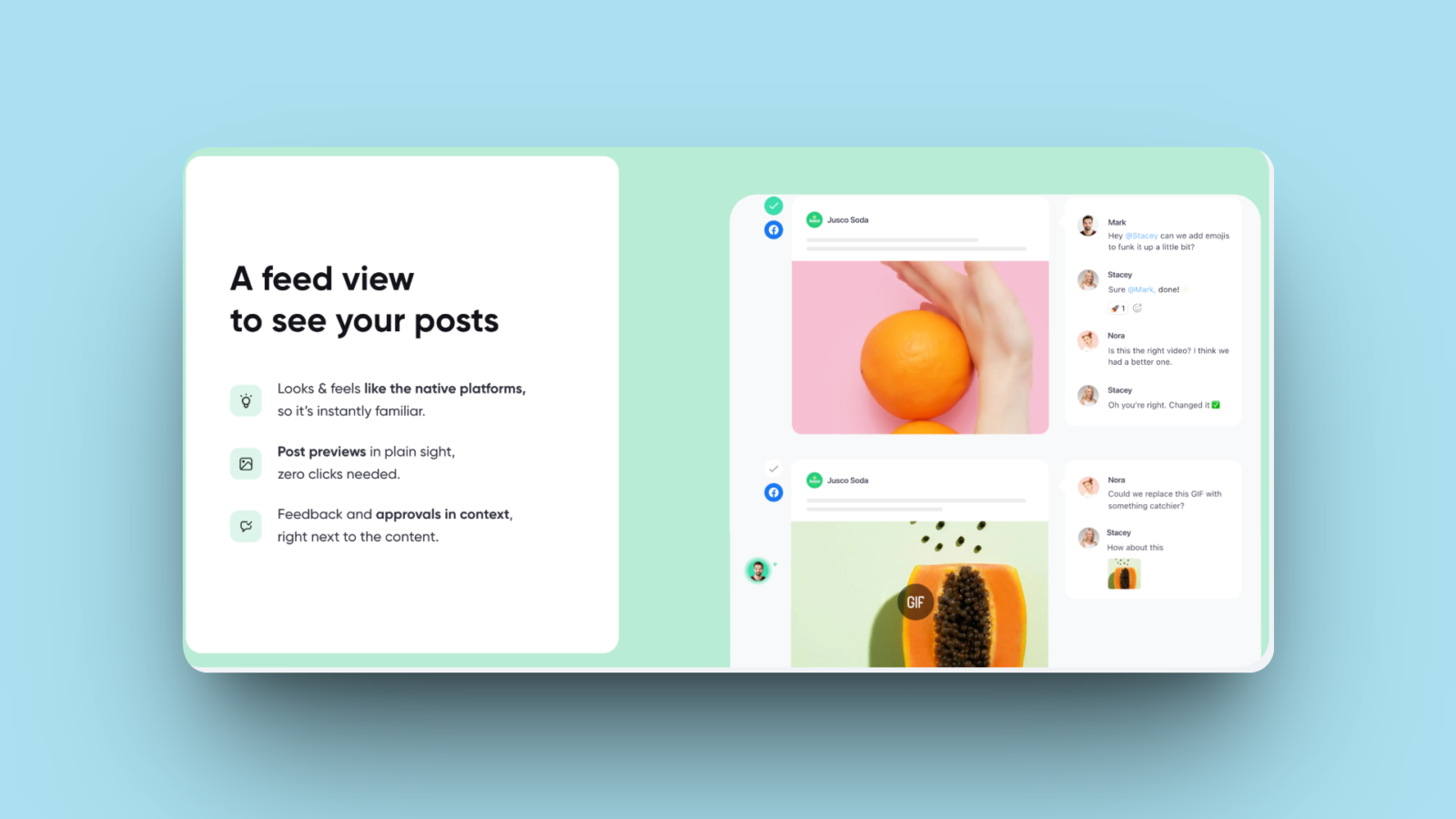
Planable is an old AMS partner and a good friend of the school – it swaps the pretty-grid problem for a different one: getting sign-off from everyone who needs to approve a post before it goes out.
Multi-step approval chains (client, then manager, then legal, whatever your actual chain looks like), comments left right on the post itself, and views for Feed, Calendar, Grid, and List depending on how your brain works. Used by 7,000+ teams, including some proper household names (Warner Music, KFC, and Mastercard among them), across nine platforms from Instagram to Threads.
- Best for: agencies and teams who need structured client sign-off before anything goes live, not just a calendar to fill.
- Watch out for: pricing is per workspace, not flat, so if you’re running content for multiple clients or brands, the cost stacks fast, a common complaint in reviews.
- How to make the most of it: map out your actual approval chain (who signs off, and in what order) before you set anything up, that structure is the whole point of the tool.
Dash Social
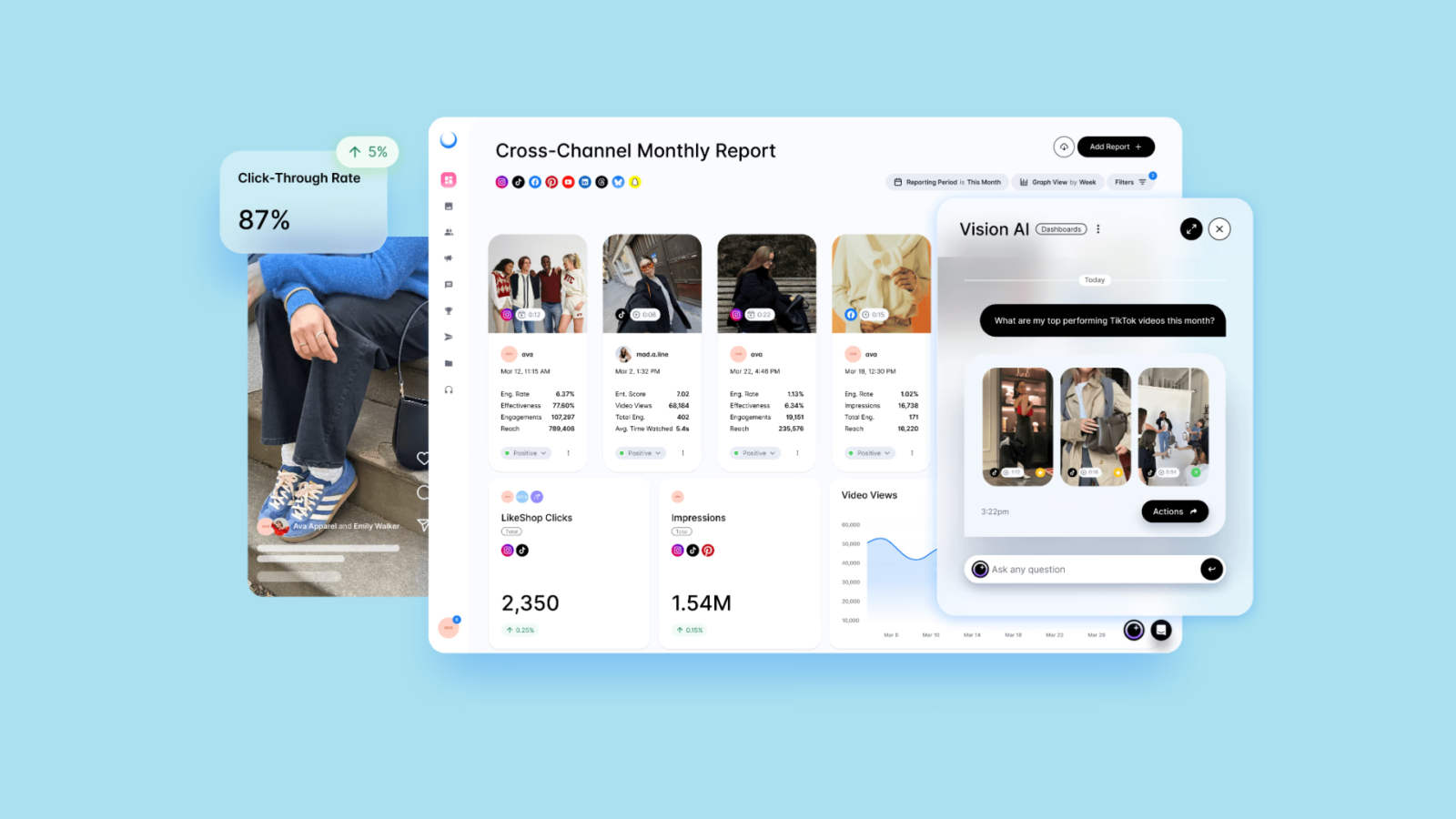
Dash Social earns its spot on the analytics side. Planning, publishing, and reporting live in one place, but the real value is the visual intelligence and KPI reporting that turns “I think this post did well” into an actual answer. Worth the look if you’re managing a bigger brand and need to prove what’s working, not just guess.
- Best for: bigger brands who need to prove what’s working with real KPI reporting.
- Watch out for: the analytics depth is the whole point, smaller accounts may not need (or want to pay for) it yet.
- How to make the most of it: pick two or three KPIs that actually matter to your brand before you drown in the reporting options.
Feedbird
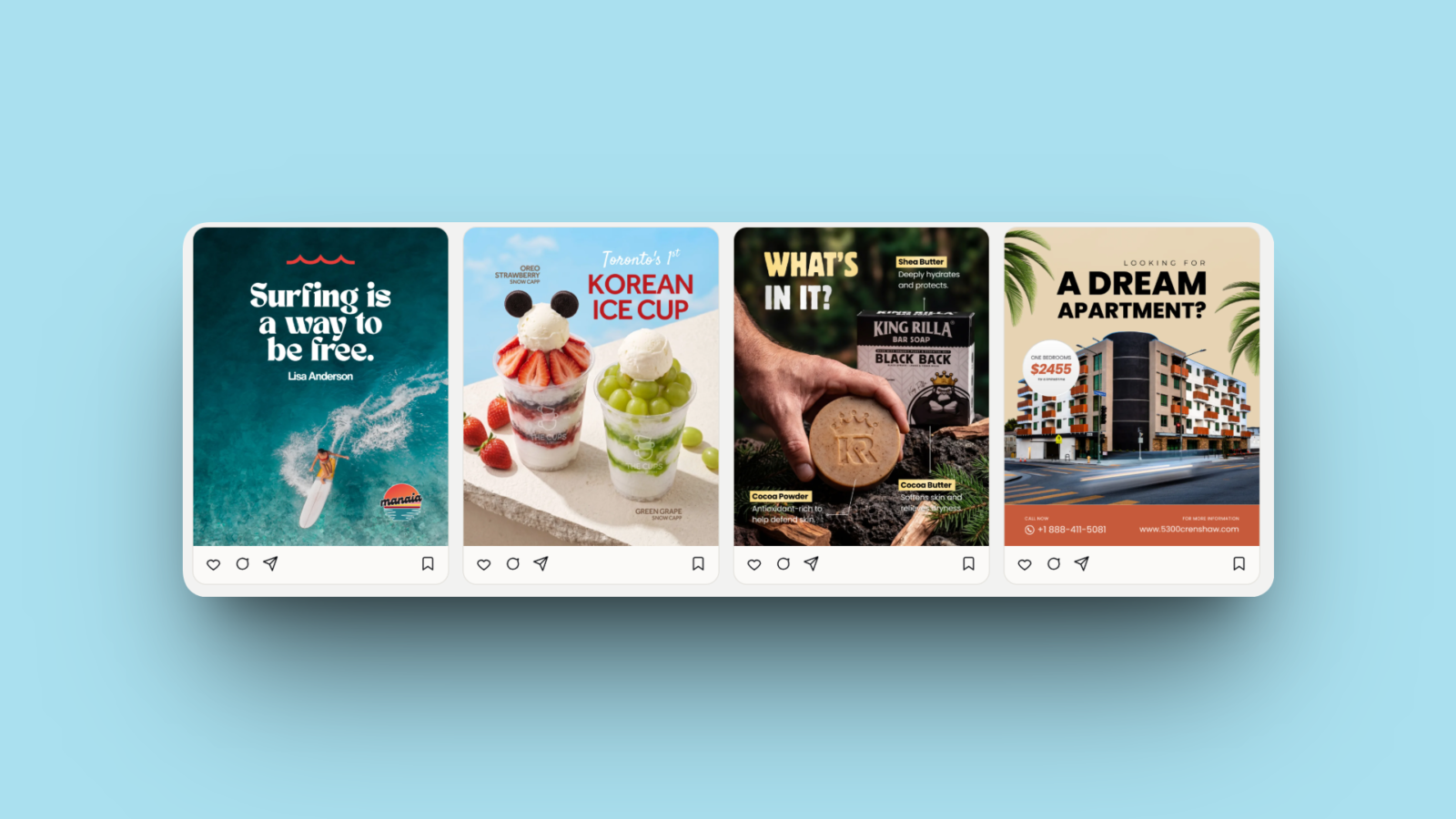
Feedbird is the one to know about the day you’d rather pay for the output than build it yourself. It’s less a piece of software and more a done-for-you service, 200+ creatives on the other end handling social posts, short-form video, ad creatives, and more, priced per service so you only pay for what you actually need.
- Best for: the day you’d rather pay for the output than build it yourself.
- Watch out for: it’s a done-for-you service, not self-serve software, you’re trading control for time back.
- How to make the most of it: brief them properly upfront (brand voice, do’s and don’ts), the output is only as good as the brief they’re working from.
But social media was never just about management. Getting your team talking about your content and getting the right creators talking about your product both matter just as much as the posting schedule, so here’s where those come in.
Tools to Take Your Social (and Strategy) Further
DSMN8
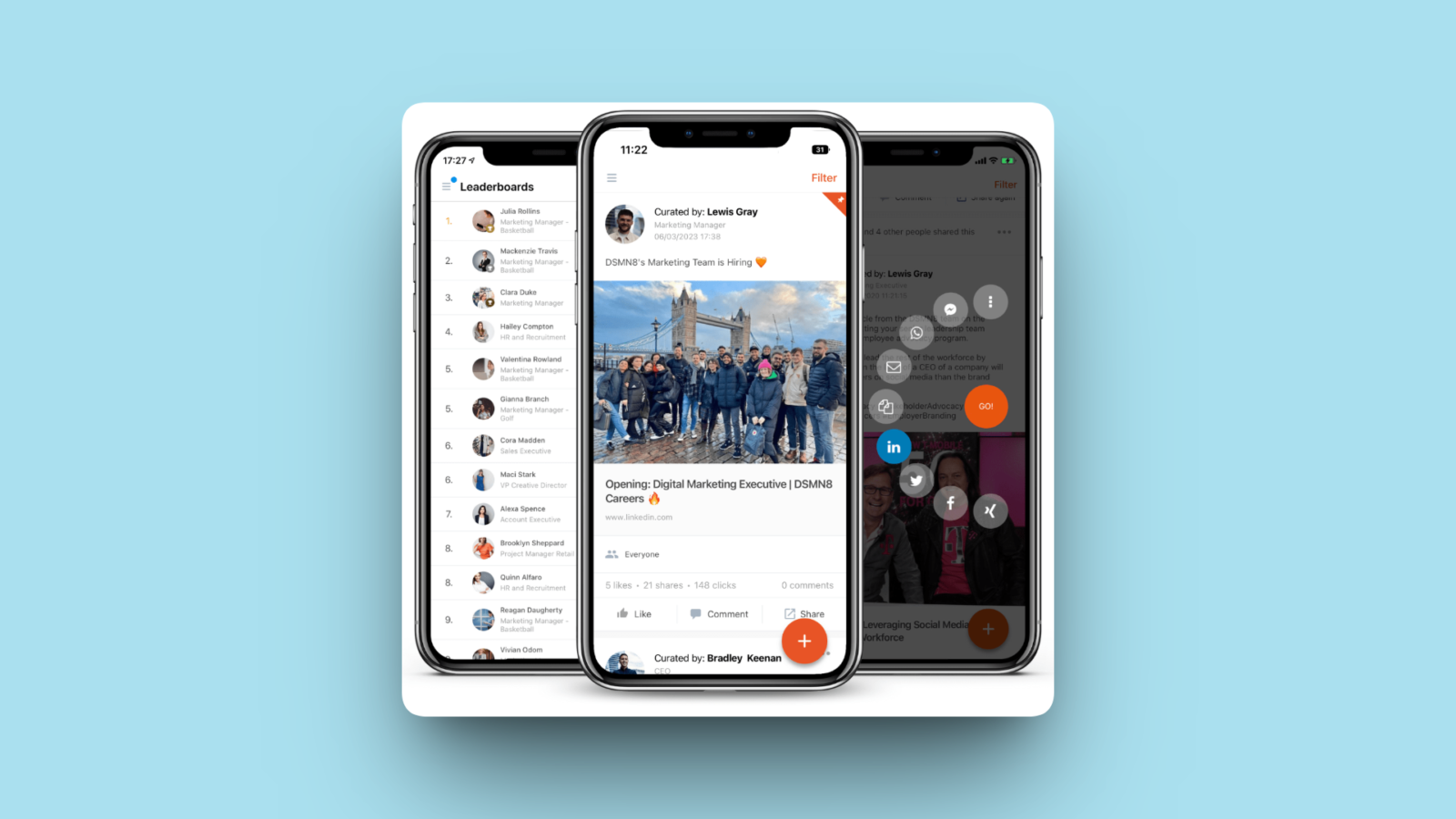
DSMN8 solves a problem none of the tools above touch: getting your colleagues to actually share the content marketing already made. It turns employee advocacy into something people can do in two clicks instead of a favour you have to keep asking for, which matters more than most marketing teams admit.
- Best for: getting colleagues to actually share the content marketing already made.
- Watch out for: it only solves the advocacy piece, the content itself still has to come from somewhere else.
- How to make the most of it: seed it with your best-performing existing content first, don’t wait for something new, advocacy works on proven posts too.
Clue Labs *
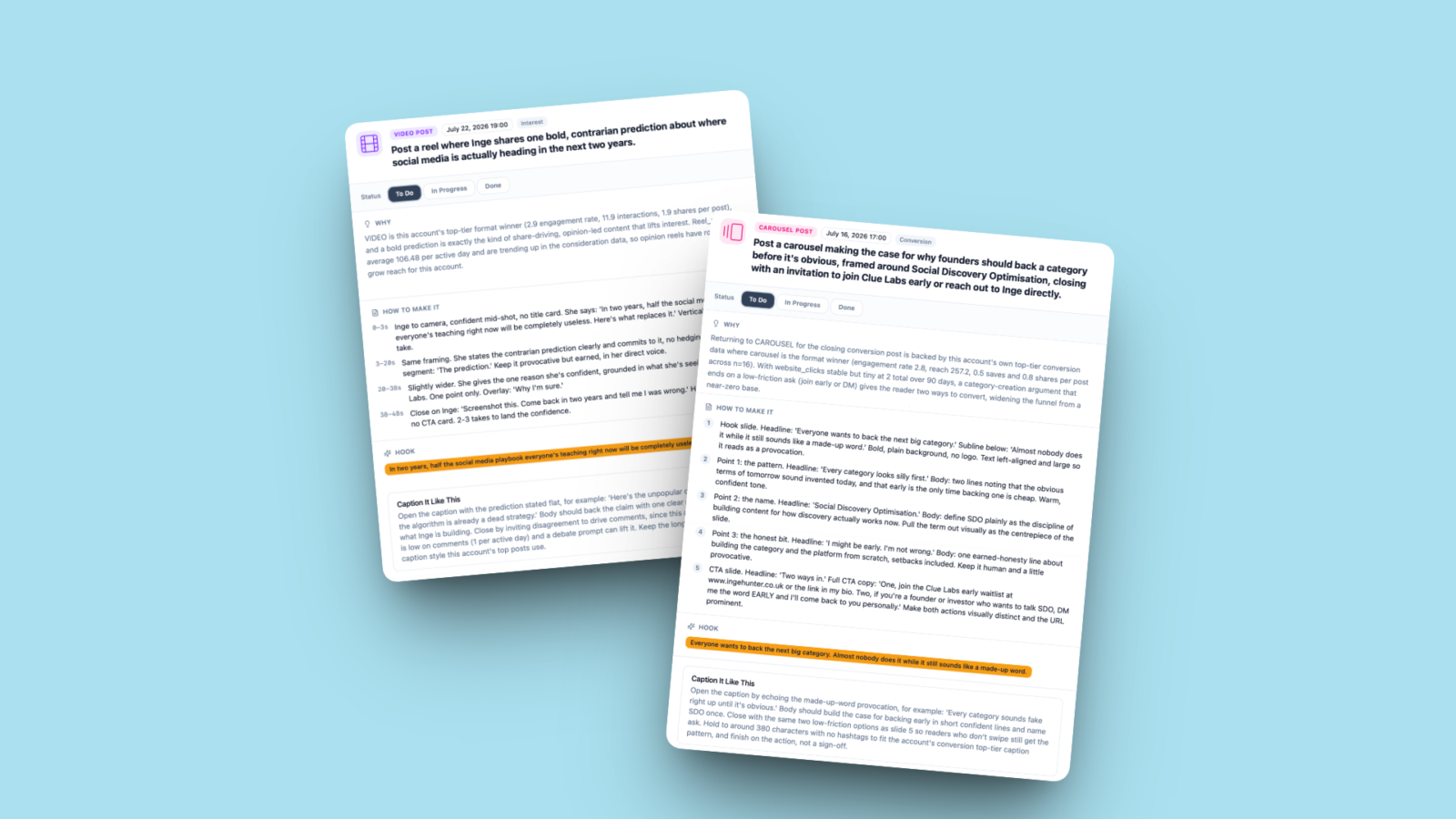
Clue Labs is an own AI-powered software, connecting to your Instagram (LinkedIn coming soon) to reverse-engineer what’s actually working and turn it into concrete recommendations instead of guesswork.It runs £97/month with a 14-day free trial if you want to try the software on its own before talking to the team behind it.
- Best for: brands wanting both the strategy and production work, plus the software that tells you what’s actually working.
- Watch out for: they’re two separate offerings under one roof, know whether you’re after the agency or the standalone software before you reach out.
- How to make the most of it: try the Clue Labs software trial first, even if you ultimately want the full agency service, it’s the fastest way to see whether their read on your content matches your own.
For Creator and Influencer Campaigns
Billo *
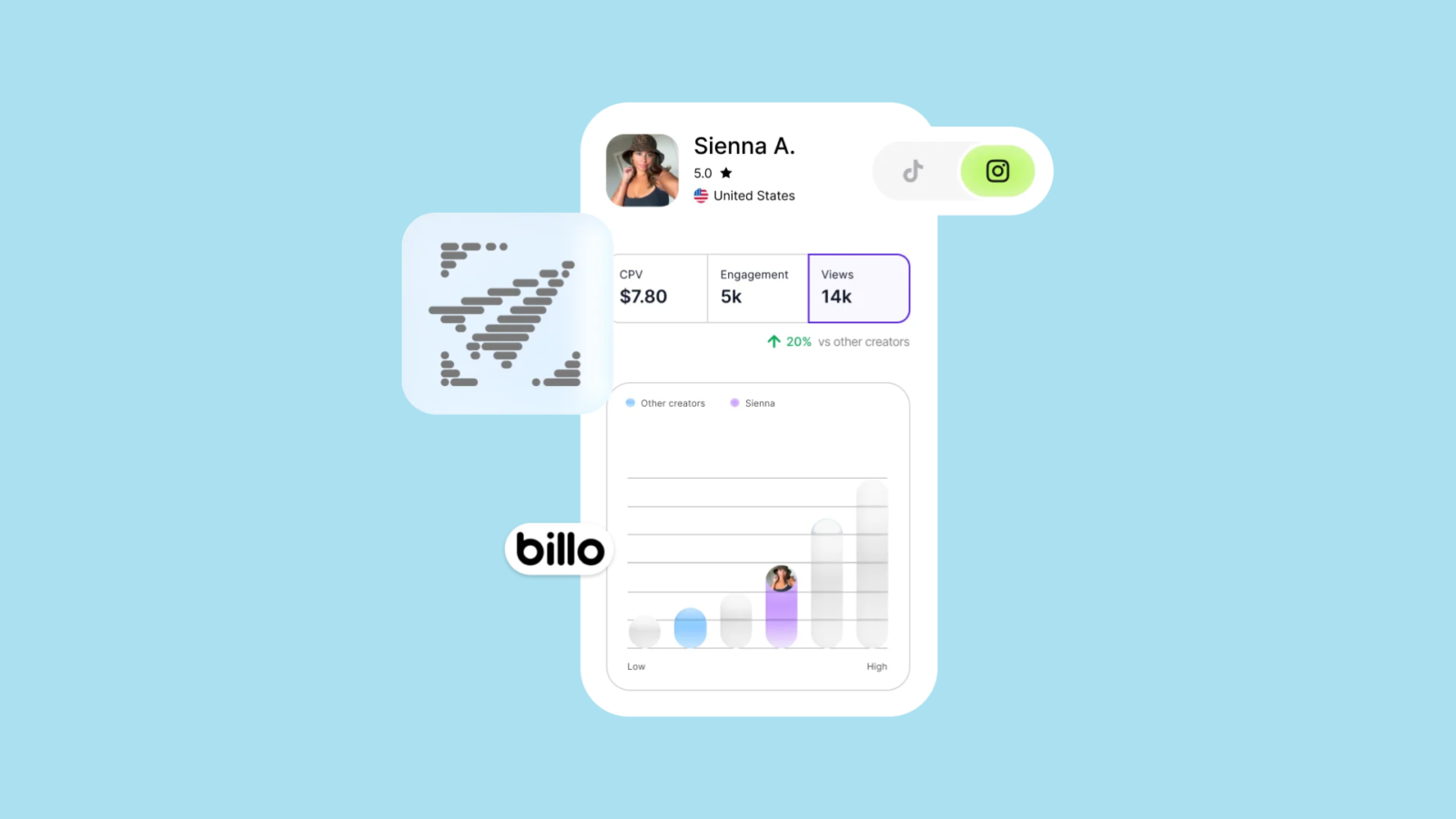
Billo is one of our favourites on this whole list, and not just because they’ve partnered with us before (hi, if you’re reading this, we owe you a call). It connects brands with a network of 5,000+ vetted creators to produce UGC video built specifically for ads, backed by their own performance data across 326k+ ads and $500M in tracked purchase value. If the goal is ad creative that doesn’t look like ad creative, this is the one to start with.
- Best for: ad creative that doesn’t look like ad creative.
- Watch out for: it’s built specifically around ad-ready UGC video, it’s not the pick if what you actually need is organic lifestyle content.
- How to make the most of it: brief creators with the hook you want tested, not just the product, their performance data is strongest when you’re testing angles, not just filming a demo.
Insense
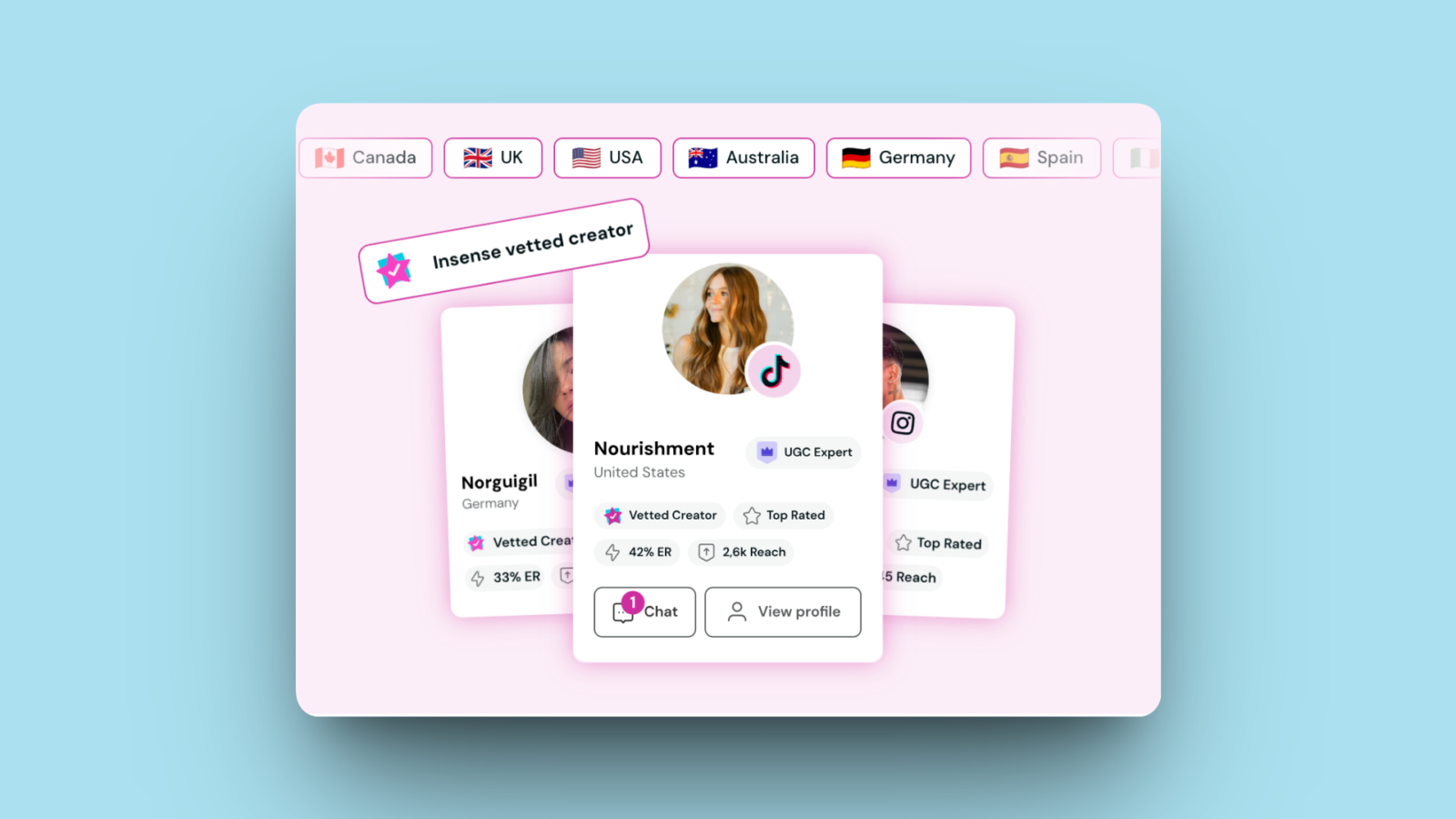
Insense is strongest if you want the content itself, not just the reach. It brings creator sourcing, briefing, and UGC production into one place, so the photos and videos creators make for you can get a second life in your organic posts and paid ads. Where Billo is built specifically around ad-ready video, Insense spreads across UGC formats more broadly.
- Best for: wanting the content itself, not just the reach, so it can live on in organic posts too.
- Watch out for: spreading across more UGC formats means slightly less specialisation than Billo’s ad-first focus.
- How to make the most of it: plan the organic reuse before the shoot, brief creators knowing the content needs to work in two places, not just one.
Stack Influence
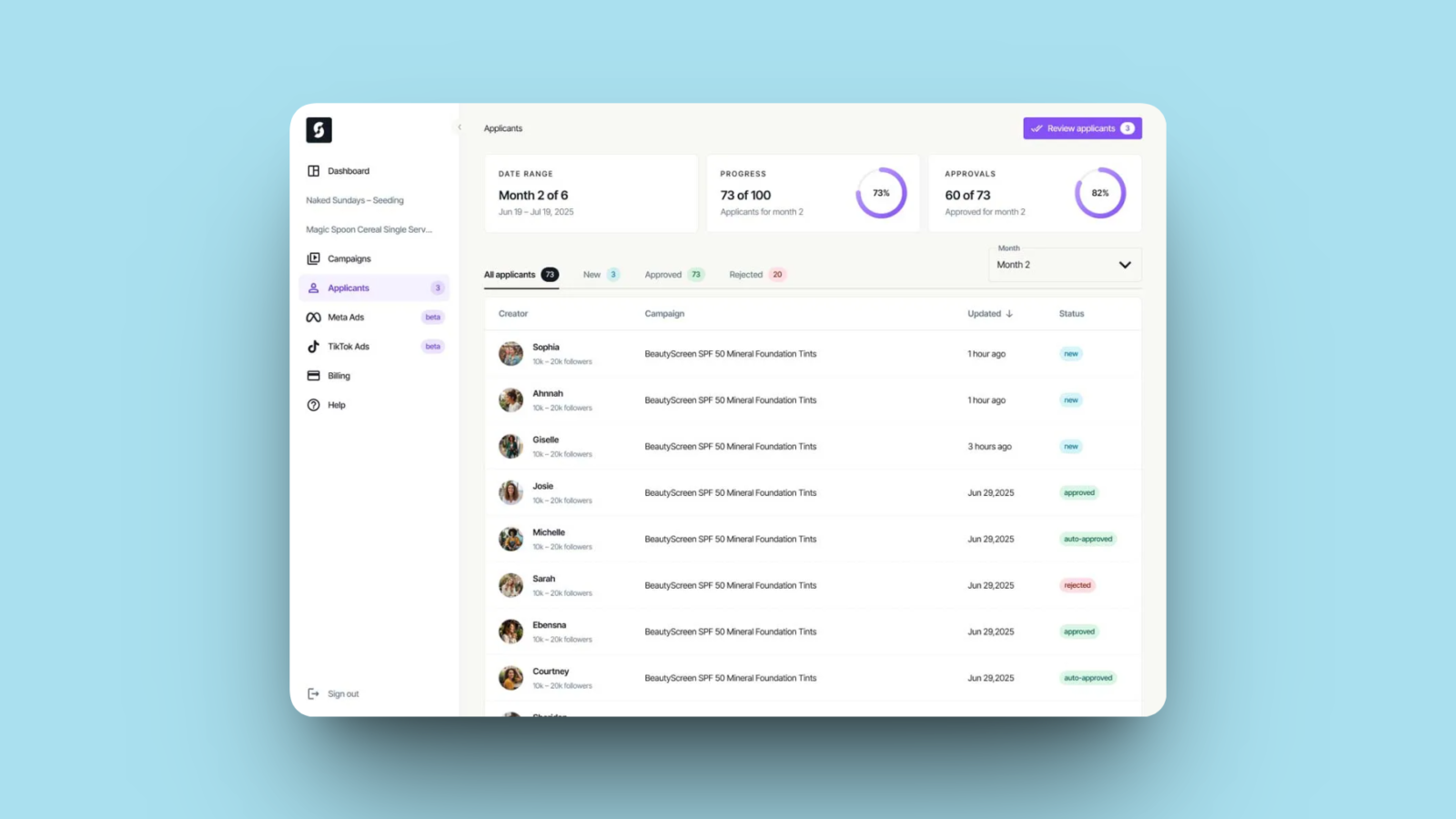
Stack Influence leans harder into scale: a network of 410k+ vetted creators and an automated process for finding creators, running collaborations, and getting product seeded out the door without you chasing every single one by hand.
- Best for: scaling creator outreach without chasing every single one by hand.
- Watch out for: it leans on volume and product seeding, it’s less built for measuring revenue per campaign.
- How to make the most of it: treat the automation as a first pass, still spot-check the creators it surfaces before a collaboration goes out under your name.
Saral
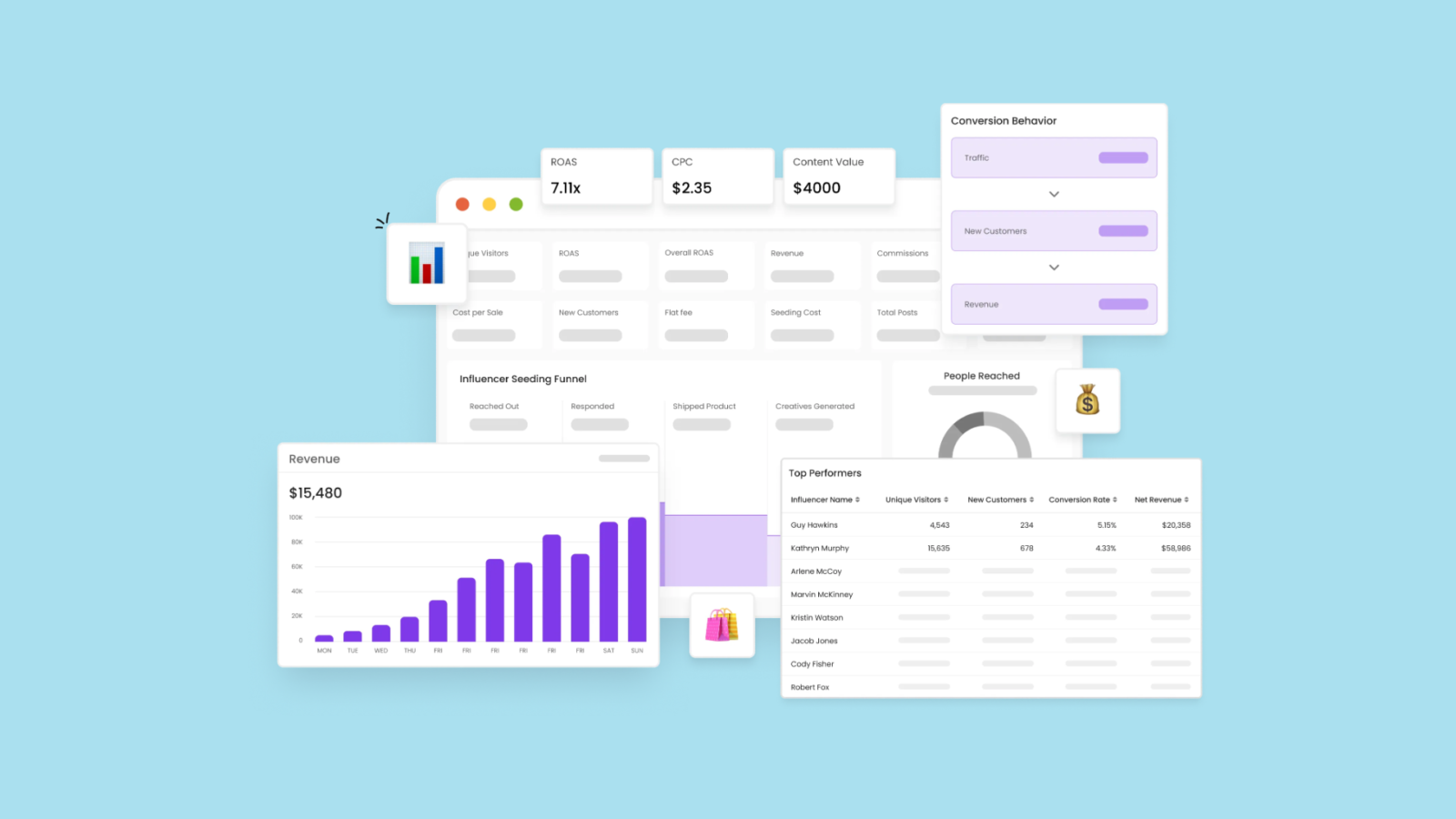
Saral rounds this group out as an “Influencer Marketing OS” built specifically for ecommerce, with the affiliate and commission tracking baked in. If you’re measuring creator campaigns in actual revenue rather than reach, this is the one built around that math from the start, where Stack Influence leans more on volume and product seeding.
- Best for: ecommerce brands who want affiliate and commission tracking baked into influencer campaigns.
- Watch out for: it’s built specifically for ecommerce, a less natural fit outside that world.
- How to make the most of it: set your commission structure before you onboard your first creator, changing it retroactively is the most common headache users report.
Which One Should You Actually Pick?
Before you go shopping, ask yourself three questions.
1. Are you running this yourself, or handing it off entirely?
If you’re staying hands-on, the pick comes down to what you want help with: full project management built for social teams (Rella), a strategy suggested to you instead of a blank calendar (SocialBee), or structured client sign-off before anything goes live (Planable). If you’d honestly rather pay for the output than build it, Feedbird does it for you.
2. Is your bigger gap making content, or proving it’s working?
If you can’t confidently answer “did that post do anything,” Dash Social‘s KPI reporting is worth the look, especially once you’re managing a bigger brand. If you want a software that tells you what’s working, Clue Labs covers that for you.
3. Is the real bottleneck inside your team, or out in the world?
If your own colleagues aren’t sharing what marketing already made, that’s DSMN8, not a scheduling problem. If it’s creators and influencers you’re after, it depends on what you need from them: ad-ready UGC video (Billo), content built for organic reuse too (Insense), scale without chasing every creator by hand (Stack Influence), or ecommerce affiliate and commission tracking baked in (Saral).
Got a tool that deserves a spot in the next Tools of the Trade roundup? We’re doing this one category at a time, so let us know what you’re using, your favourite might be next.
Want more? Here's your invitation from the school ⤵️
We don’t teach you how to do more. We teach you how to do it better.
You don’t need more hacks. You need smarter foundations, better systems, and clarity that cuts through the noise.You got into this to make a difference. Let’s help you do that, with strategy and a whole lotta heart.
➡️ Find out how we can help via our all-access pass.